B2B SaaS Lead Generation: More Leads Won't Save You
Most B2B SaaS companies think lead volume is the problem. It's not. Here's what a real SaaS lead generation system looks like and how to build one.
Fractional Demand Team
Stop thinking of lead generation as the goal. It's a capture mechanism at the end of a research process you may not have been part of.
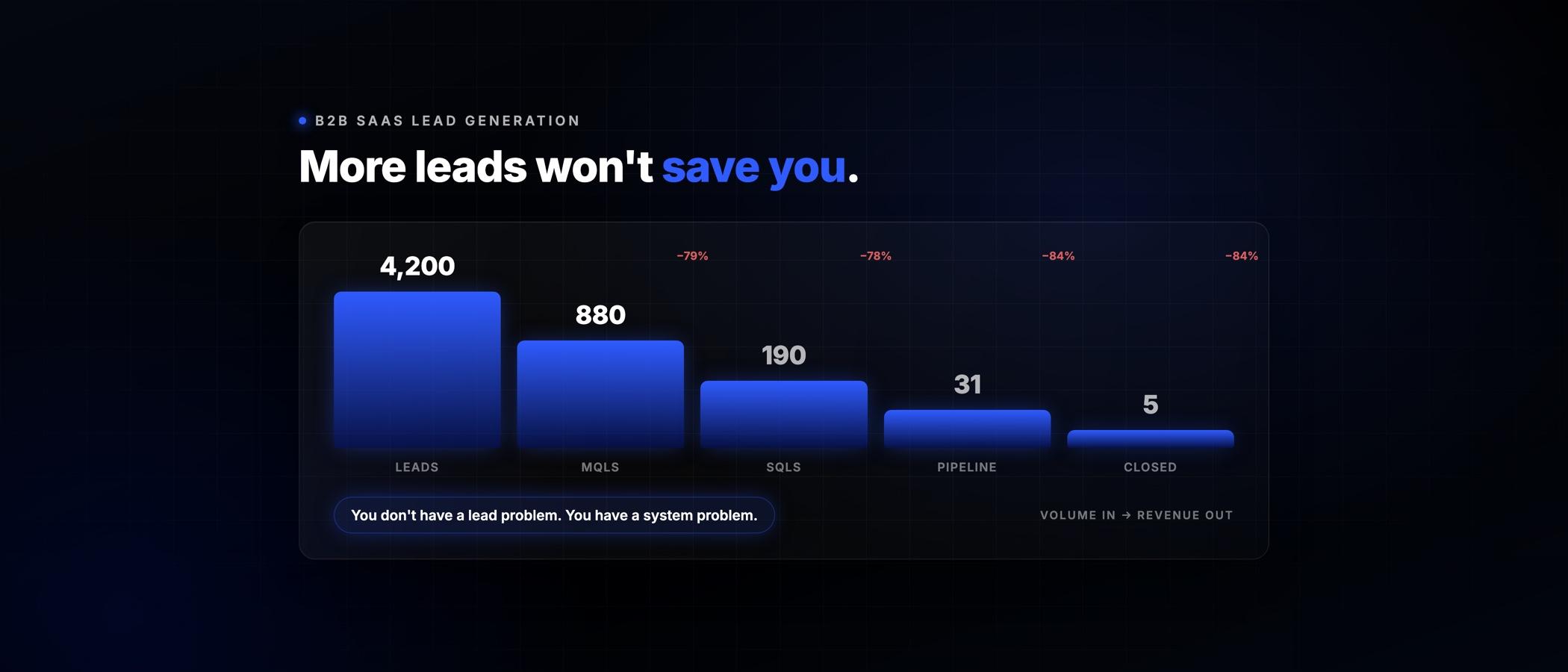
I've talked to a lot of VPs of Marketing at Series A–C SaaS companies who come in with the same complaint: "We need more leads." When I dig in, what I almost always find is that they don't have a lead volume problem. They have a demand infrastructure problem. The leads they're getting are either the wrong people, too early in the buying process, or disconnected from any system that would actually turn them into pipeline.
More ads won't fix that. More landing pages won't fix that. More leads won't fix that.
B2B SaaS lead generation isn't broken because you don't have enough tactics. It's broken because the system that should be generating qualified hand-raisers isn't actually built yet. This post breaks down where it usually falls apart and what to do about it.
Why Most B2B SaaS Lead Generation Doesn't Actually Generate Pipeline
Lead generation in SaaS has a specific problem that doesn't get talked about enough: your buyers are doing most of their research before they ever talk to you.
By the time a B2B buyer fills out a form, they've already done a lot of the work. They've Googled the category, read review sites, watched someone in their network talk about the problem on LinkedIn, and formed a shortlist. If you weren't visible during that research phase, no amount of CPL optimization helps you.
That means your "lead generation" program is actually capturing demand that already exists, not creating it. Which is fine, if you've also built the upstream system that created the demand. Most teams haven't.
This is why so many SaaS companies feel like they're generating leads but not pipeline. The leads they're getting fall into a few buckets:
- People who found them late and already chose someone else
- People who weren't serious buyers, just researchers
- People who were a fit but never got nurtured after the form fill
Each of those is a different problem. But they all look the same in your CRM: leads that didn't convert.
Most teams respond by running more ads, lowering the form friction, or firing the agency. None of that addresses the real issue. (And if the CPL conversation sounds familiar, this post on why cost per lead is the wrong metric breaks down the better alternatives.)
The Three Places B2B SaaS Lead Generation Actually Breaks Down
In my experience building demand systems for SaaS companies, the breakdown almost always happens in one of three places. Usually more than one at the same time.
Tier 1: You're targeting too broadly.
If your ICP is "B2B SaaS companies with 50–500 employees," that's not an ICP. That's a category. Real targeting means knowing which industries convert, what the tech stack looks like at a company that's ready to buy, and what job title is held by the person who actually champions the purchase decision.
When your targeting is too broad, you're paying to reach people who will never buy. Your CPL looks okay. Your cost per qualified opportunity is bad. And you don't know why, because you're measuring the wrong thing at the top and nothing at the bottom.
Tier 2: You're optimizing for volume instead of fit.
Volume is a trap. It feels like progress because the number goes up. But if the leads aren't right, you're doing two bad things at once: burning sales team time on non-buyers, and teaching your paid media algorithm to find more people like the ones who converted on the form, not the ones who actually became customers.
The right metric isn't CPL. It's cost per qualified opportunity. Getting there requires your CRM to actually track lead quality and pass that signal back to your campaigns. Most SaaS companies don't have this wired up. So they optimize for form fills and wonder why pipeline is thin.
Tier 3: Nothing meaningful happens after the form fill.
This is the most common and the most frustrating to watch. Someone fills out a form. They get an automated "thanks, we'll be in touch" email. A rep follows up two or three days later. The person has moved on.
If your lead response time is slow, you're losing buyers who were actually ready to talk. If you're not enriching the lead the moment it comes in, your reps are going in blind: no company context, no tech stack, no signal about why this person showed up now. If you're not routing by ICP fit, you're adding friction at the exact moment the buyer has the most intent.
The follow-up process is where B2B SaaS lead generation actually lives or dies. Most of the investment goes into generating the lead. Almost none goes into what happens immediately after.
What a Real SaaS Lead Generation System Looks Like
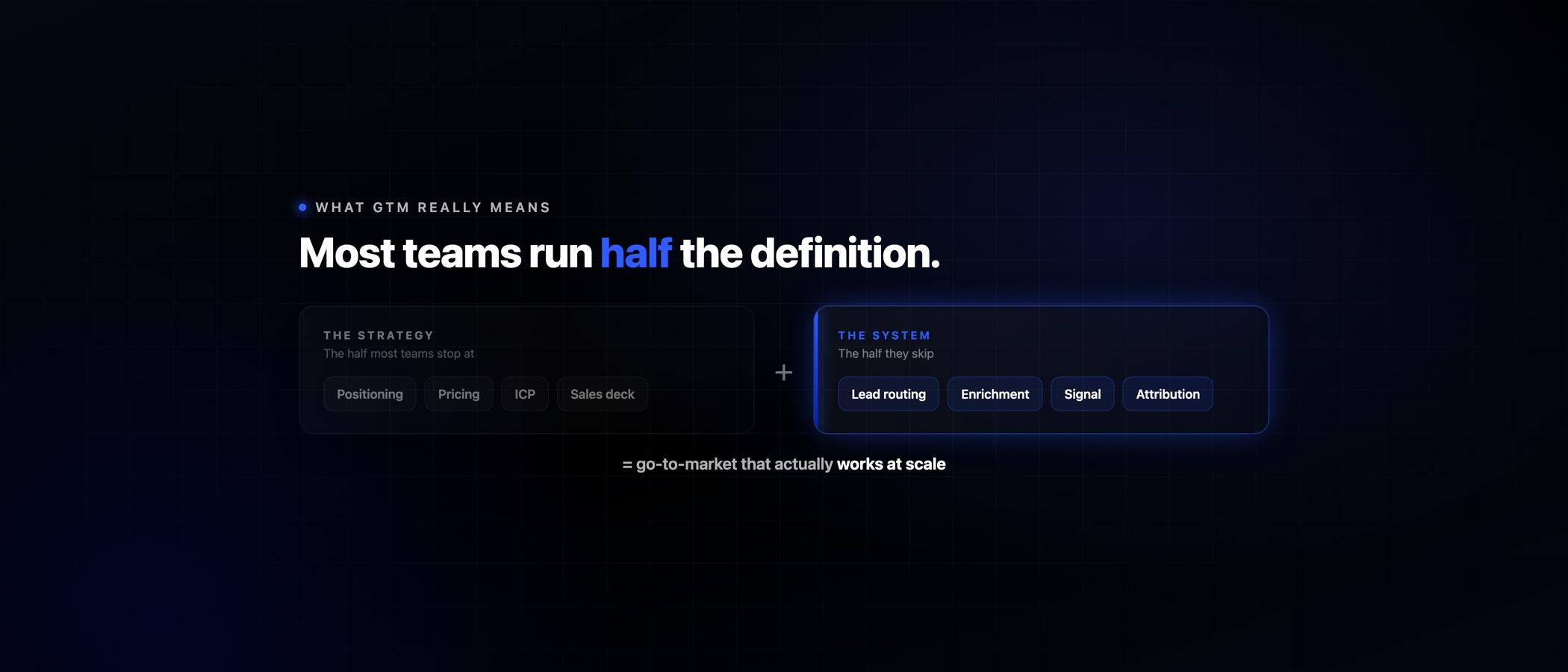
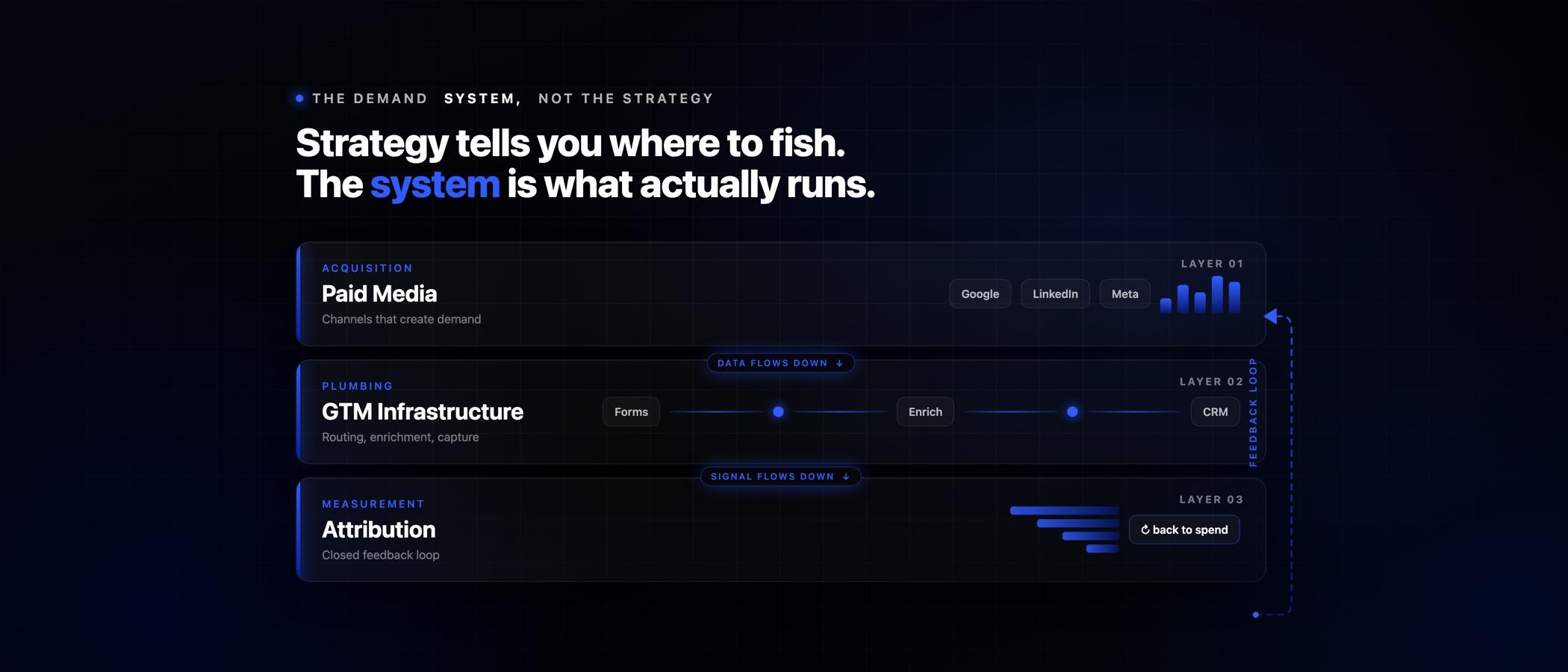
The fix isn't another tactic. It's infrastructure. Here's the play I'd run for a Series B SaaS company that's burning budget on lead gen with thin pipeline to show for it.
Step 1: Define the ICP with actual criteria, not descriptions.
Sit down with your sales team and reverse-engineer your last 10–15 customers. What do they have in common? Industry, company size, tech stack, team size in the relevant department, common objections that didn't kill the deal. Build that into a scoring model in HubSpot. Not a fuzzy "good fit / bad fit" score. Actual weighted criteria you can point to.
This takes a week to do right. It changes every downstream decision.
Step 2: Enrich every inbound lead the moment it lands.
When someone fills out a form, you have peak intent. Use that window. Clay (or a similar enrichment tool) can pull company data, tech stack information, and LinkedIn context into HubSpot automatically, before a rep ever opens the record.
By the time someone on your team looks at the lead, they should already know: company size and growth rate, tech stack and integrations, job title and LinkedIn activity, and whether this matches your ICP scoring model.
This isn't exotic. It's standard operating procedure now. If you're still sending generic "thanks for your interest" emails to unenriched leads, you're already behind the companies you're competing against.
Step 3: Build the paid media program around pipeline signals, not lead volume.
Run your LinkedIn and Google ads with a clear objective: reach the accounts on your ICP list, show up in the channels where your buyers are already researching, and track what happens to those leads downstream in the CRM, not just on the ad platform.
That means pushing closed-won and qualified opportunity data back to your campaigns. It means knowing your cost per opportunity. And it means accepting that a LinkedIn lead that costs more and closes at a higher rate is more valuable than a cheaper lead from a different channel that never makes it to pipeline.
The math usually surprises people when they first see it laid out clearly.
Step 4: Build the mid-funnel you're probably skipping.
Most SaaS lead gen runs two modes: cold and ready-to-buy. The space between those two states is where most of your potential pipeline sits.
Someone who downloaded a guide, attended a webinar, or visited your pricing page multiple times. That person is not a cold prospect. But they're probably not raising their hand yet either. They're in the research phase. They're comparing you to alternatives. They're building a case internally.
The mid-funnel is where demand converts to intent. Build email sequences, retargeting ads, and content for this group specifically. Not what you'd send a cold prospect. What a warm prospect needs: specific evidence, real customer outcomes, comparison content, direct answers to the objections they're probably sitting with.
If you skip this layer, you're letting pipeline walk out the door every single month.
The Play Here Is Pretty Simple
More B2B SaaS lead generation won't fix a system that can't handle the leads it already has.
The companies that get this right aren't spending more. They're spending more intentionally, with tighter ICP definition, real-time enrichment, and downstream tracking that actually tells them what's working. They've built the mid-funnel instead of pretending the funnel jumps from "never heard of us" to "booked a demo."
If your lead gen feels like it's running but not producing, the question worth asking isn't "how do I get more leads?" It's "what happens after a lead comes in, and is any of it actually working?"
Start there. Fix the infrastructure. The leads will mean something after that.
If you want to see what this looks like built out for your specific setup, our fractional paid media and RevOps teams build these systems for B2B SaaS companies.