
GTM Marketing Isn't What Most B2B Teams Are Doing
Most B2B teams say they run GTM marketing. Most are really running campaign marketing. Here's the difference, and why it decides whether your pipeline is real.
Fractional Demand Team
Most B2B companies have a marketing team. Most of them are not doing GTM marketing.
I know that sounds like semantics. It's not.
GTM marketing is a specific discipline: the marketing motion that makes your go-to-market system run. Tied to pipeline. Tied to actual revenue signals. Built to compound over time.
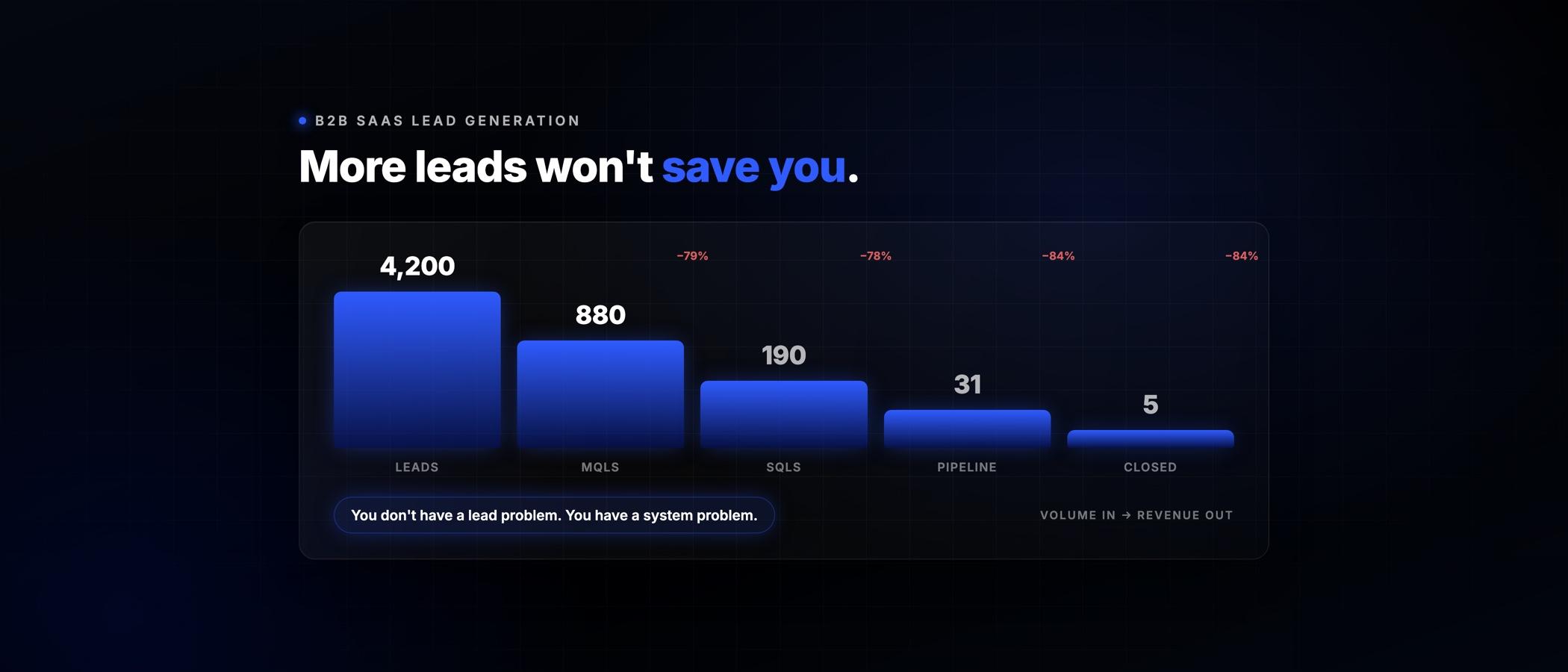
What most companies are running is campaign marketing. A quarterly playbook of campaigns, each with its own goals, its own budget, and its own definition of success. Maybe some of it connects to pipeline. Maybe some of it does not. Often nobody knows for sure.
The distinction matters because the fix for each problem is completely different.
What GTM Marketing Actually Is
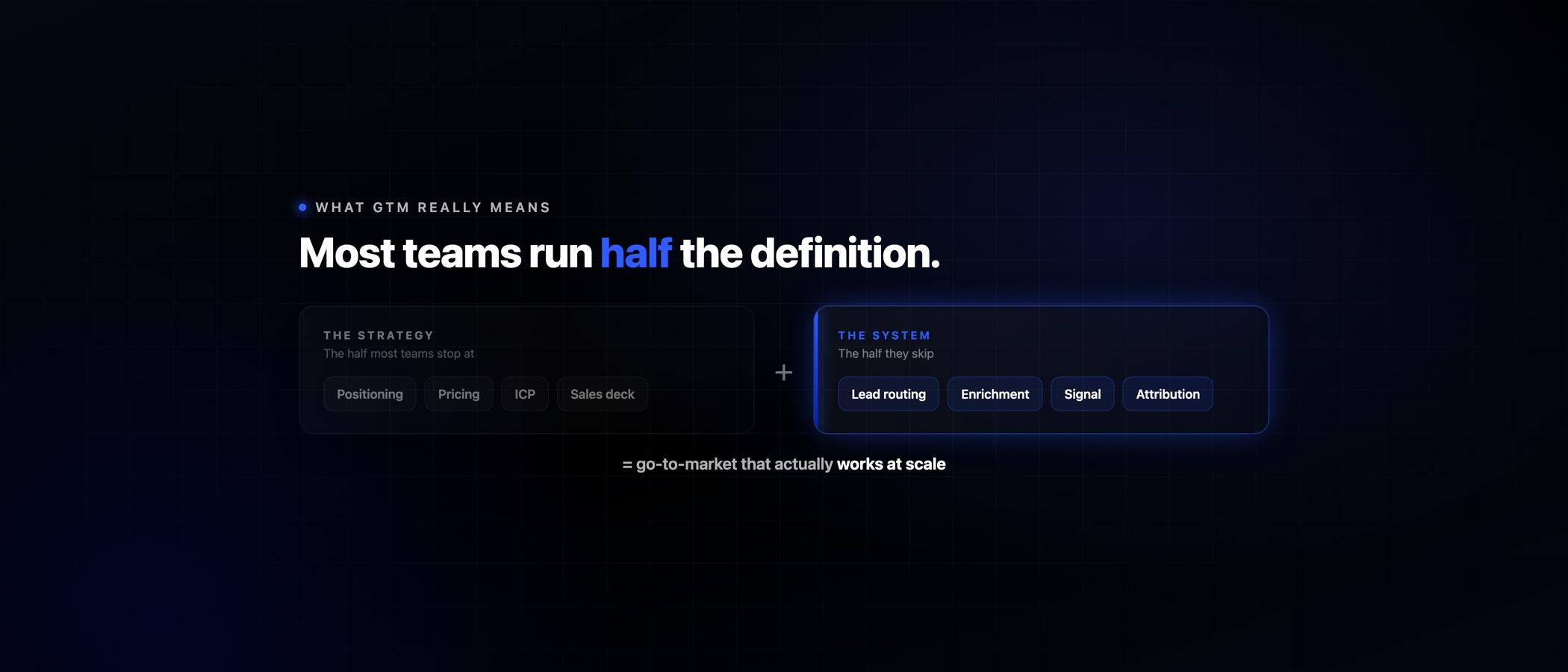
Go-to-market marketing is not the strategy deck. It's not the positioning statement or the ICP definition on page 14 of your annual plan. Those are inputs.
GTM marketing is the systematic marketing motion that turns your go-to-market strategy into actual pipeline. It has three components that have to work together:
ICP targeting with real segmentation. Not "mid-market SaaS companies" as a bullet point in a deck. Actual segmentation built into your systems: firmographic scoring in HubSpot, behavioral signals from your site and intent data, enrichment data from Clay that tells you whether a prospect fits Tier 1, 2, or 3 before your SDR touches them. The targeting isn't a strategy. It's infrastructure.
Channel strategy tied to pipeline, not activity. This is the one most teams get wrong. GTM marketing doesn't measure success by MQLs or CPL or impressions. It measures by pipeline influenced. Which channels are contributing to deals that actually close? Which ones are generating activity that looks good in a slide but doesn't move revenue? You need attribution architecture to answer that honestly, and most companies don't have it.
Attribution that connects marketing to revenue. This is where it gets uncomfortable. Real attribution in a GTM marketing system means you can answer: where did this closed-won deal originate? What marketing touches influenced it, at what stages, and at what cost? Not approximately. Actually. That requires clean data, a CRM that's set up correctly, and someone who has actually built this before.
When those three things work together, you have GTM marketing. When one is missing, you have campaign marketing, and you're guessing at which pieces matter.
Why Most Teams End Up With Campaign Marketing
Here's the thing: campaign marketing is easier to build and easier to defend internally.
Quarterly campaigns have clear deliverables. Clear owners. Clear timelines. You launch a campaign, it runs for 90 days, you report on the metrics you decided to report on, and you move to the next one.
GTM marketing requires you to build something that's supposed to compound. You're building an ICP model. You're architecting attribution. You're setting up enrichment workflows. The payoff is not visible in week four. It's visible in month six, when your sales team is working from enriched, segmented lists instead of a raw CSV, and your reporting actually shows which channels are driving closed-won.
That is a harder thing to fund, staff, and maintain patience for.
I've been doing this long enough to know: the companies that figure out demand generation fastest are not the ones with the biggest budgets. They're the ones that build the infrastructure before they scale the spend. Every time.
What Campaign Marketing Looks Like When It's Running
A few signals that show up consistently, across companies from Series A to Series C:
Paid media is running but nobody can say with confidence how much pipeline it's driving. There's a cost-per-lead number. There's maybe a cost-per-MQL. But the CRO asks "what's the ROI on our paid spend" and the honest answer is "I think it's contributing to about X pipeline" with a lot of estimation involved.
The CRM is technically set up but practically broken. HubSpot has duplicate contacts. Lead routing goes to the wrong reps. Deal stages don't reflect reality. And nobody has time to fix it because the next campaign is already in-flight.
Outbound sequences exist but aren't personalized with enrichment data. The SDR team is working from a list that was good six months ago. They know their ICP at a high level but their outreach doesn't reflect any of the context that Clay could be pulling: job changes, intent signals, technographic shifts.
Attribution is one person's best guess. Usually the demand gen manager's. Usually based on form fill source, which captures maybe 20% of actual marketing influence.
None of this is a failure of the marketing team. It's a failure of the system they're working inside.
The Three Questions That Tell You Which One You're Running
I'd ask any marketing or revenue leader these three questions:
One. If your CEO asked you tomorrow which marketing channel drove the most pipeline last quarter (not leads, pipeline), could you answer with a number you actually trust?
Two. Is your ICP definition built into your systems? Not a slide. Not a shared doc. Actually encoded into your lead scoring model, your HubSpot properties, your outbound segmentation?
Three. If you doubled your paid media budget next Monday, do you have the attribution infrastructure to know in 60 days whether it worked?
If the answer to any of those is "no" or "it's complicated," that's the gap. Not the strategy. The system.
What Fixing It Actually Looks Like
This is not a framework problem. It's a systems problem. And it has a specific set of fixes.
Attribution architecture: Connecting your CRM, ad platforms, and revenue data into something that can actually answer the pipeline question. This takes a few weeks to build right. It's not a one-hour HubSpot workflow.
ICP scoring: Taking your ideal customer profile out of a deck and building it into HubSpot as actual lead and account properties, weighted and scored. This is the foundation for every outbound sequence and every paid media targeting decision you make.
Enrichment infrastructure: Using Clay (or similar) to keep your ICP scoring current with real-time data: funding signals, job change data, technographic changes, intent. This is what separates Tier 1 outreach from generic prospecting.
Channel measurement: Deciding how you're going to measure pipeline contribution by channel and actually building that reporting. Not "we'll figure it out later." Deciding upfront and encoding it.
None of this is glamorous. All of it is what makes GTM marketing work.
What GTM Marketing Looks Like When It's Running Right
When it's actually working, here's what changes:
Your sales team trusts the leads they're getting. Not because marketing promised they were good, because they can see why, in the data.
Your paid media spend goes up or down based on pipeline ROI, not gut feel. You can see which LinkedIn campaigns are contributing to closed-won and which ones are burning budget on prospects who were never going to buy.
Your reporting to leadership is not "here's what we did" but "here's what it produced." Pipeline by source. CAC by channel. Marketing's contribution to revenue, with receipts.
And your outbound team is not starting from scratch every quarter. They're working inside a system that keeps getting cleaner, more targeted, and more personalized, because the infrastructure underneath it is compounding.
That's the difference. Not a better strategy. A system that makes the strategy executable.
If you want to see what that system looks like in practice, our GTM Engineering Playbook walks through 11 specific plays we're running for clients right now: the tools, the workflows, and the logic behind each one.
And if you want to understand how GTM strategy and GTM systems fit together at a broader level, this post on what GTM actually means is worth reading first. It's the context that makes the engineering layer make sense.
The goal isn't a smarter strategy. It's a system that makes the strategy executable. And there's a meaningful gap between those two things.