
AI SEO Is Still SEO: What's Working in AI Search
Dan Deceuster of Zion HealthShare on why AI SEO is still SEO: fan-out queries, top 20 citations, chunked pages, and measuring it in Search Console.
Fractional Demand Team
AI SEO is the work of getting your brand found, cited and recommended inside answers from ChatGPT, Gemini, Perplexity and Google's AI Mode. According to Dan Deceuster, it's still just SEO.
Dan is VP Marketing at Zion HealthShare, and he's been in digital marketing since 2008. We had him on Teach Me in 10 because almost every marketer we talk to right now is asking the same question. Is the old SEO playbook dead, and what do I do instead? His answer was refreshingly boring. Keep doing the fundamentals. Add AI as one more tactic. Measure it with the tools you already have.
Here's the full breakdown.
Do you need a new SEO playbook for AI search?
No. Dan's point is that this isn't the first time search has been upended. YouTube became the second largest search engine. Amazon changed how people search for products. Social media changed how people search for news. Nobody threw out SEO any of those times. They evolved.
“To me, AI SEO is just a tactic within the strategy of SEO.”
Dan Deceuster, VP Marketing at Zion HealthShare
It sits next to the tactics you already run: content marketing, multimedia, link building. And it doesn't replace Google. AI tools are growing fast, but Google still owns search, and Dan doesn't expect it to be fully replaced. So the move isn't to abandon your SEO strategy. It's to add the AI layer on top of it.
He's also done with the acronyms. GEO, AIO, AEO. In his words, "too many vowels." He still calls it all SEO.
How do you tell AI SEO hype from what's working?
Start with who's talking. Dan's rule is simple: the hype almost always comes from someone selling something. A tool, a service, a new acronym with a retainer attached.
“If they have something they're selling you, I would be very cautious about following their advice.”
Dan Deceuster, VP Marketing at Zion HealthShare
His favorite example is llms.txt. People talk about it like a protocol you have to follow. It isn't. You can put any .txt file on your site, and if it's crawlable, search engines and LLMs will find it and read it like any other content. Someone once published a cats.txt file that's just characters arranged in the shape of a cat, and it got indexed. That's the point. Being read isn't the same as being obeyed.
robots.txt is different. It's a real protocol that search engine crawlers follow as instructions. There's no equivalent for LLMs yet.
 Any .txt file can get indexed. Only robots.txt gives crawlers instructions.
Where do ChatGPT's answers come from?
This is the part that makes the "SEO is dead" argument fall apart. Dan breaks a ChatGPT answer into two sources:
- Training data. About two thirds of prompts get answered from what the model already learned. That's an enormous mountain of books, websites and text, and it gets dated fast.
- Live web search. About a third of prompts trigger what's called a grounding search. Ask who won the game last night and the model knows it needs current information, so it goes and searches Google and Bing.
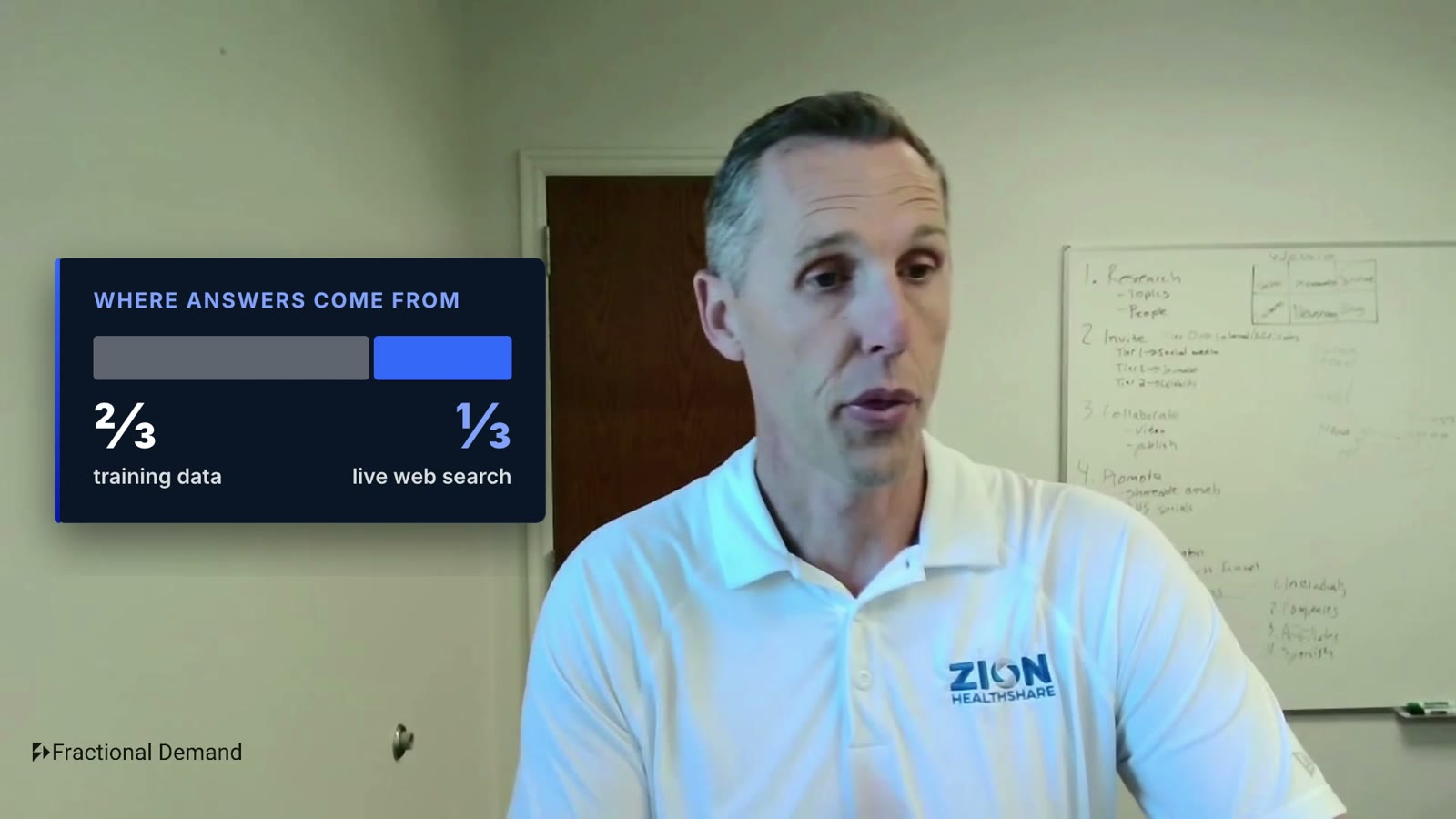 Two thirds training data, one third live web search.
You can tell which one you're getting. If the answer says it's searching and you see little gray boxes with website names at the end, those are citations. That's live search. No citations usually means it's working from training data.
That live search third is where you can win. And it runs on search rankings.
What are fan-out queries, and why does the top 20 matter now?
When ChatGPT searches, it doesn't search the way you do. You type one thing and scroll ten blue links. It runs what Dan calls fan-out queries. Ask it "what's the best CRM software right now?" and it might search "top CRM software 2025," "best value CRM software," "top rated review CRM for tech," and 10, 20, 30, 40 more variations. Then it pulls everything it finds into one answer.
 One prompt in, dozens of searches out, one answer back.
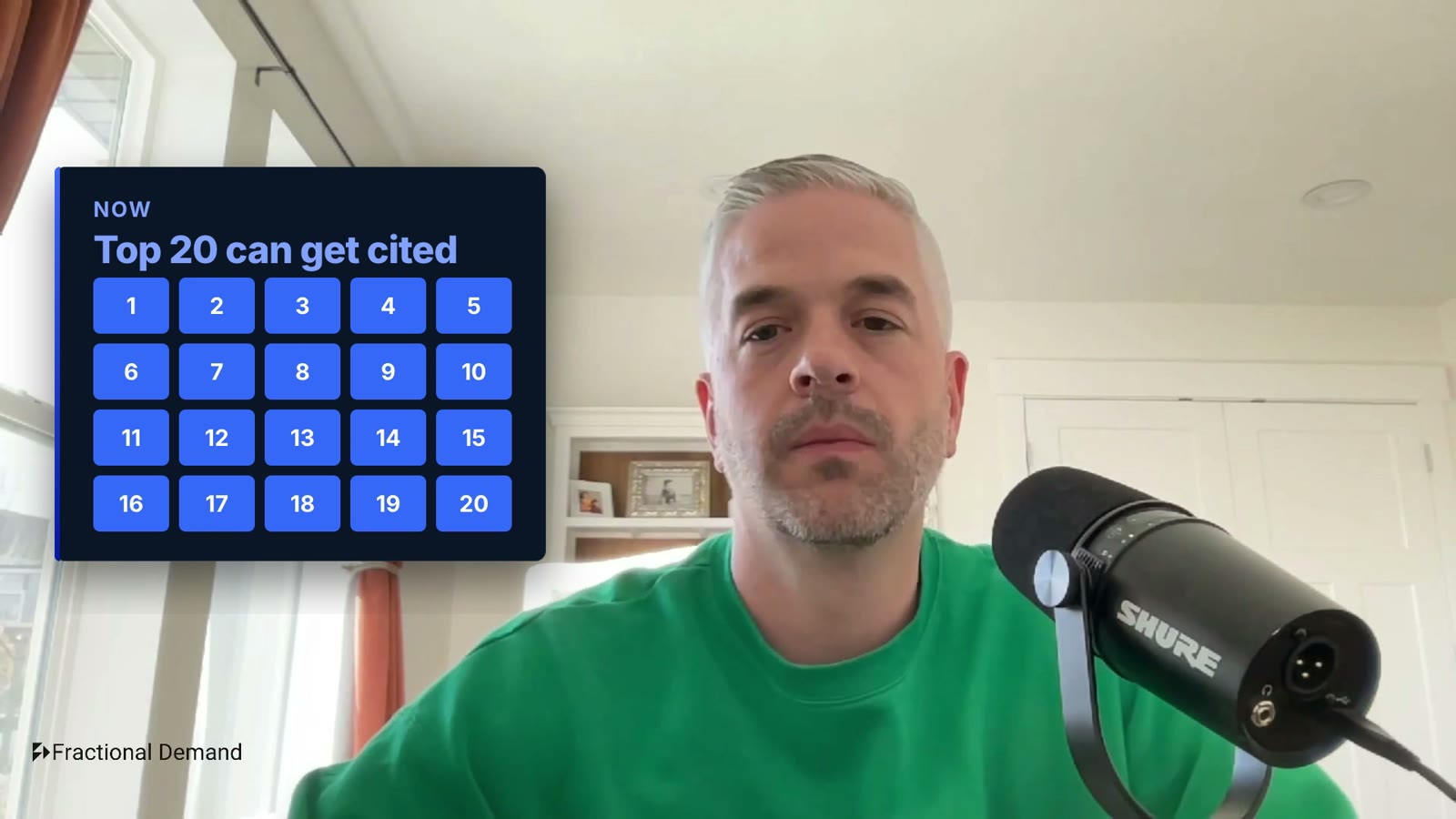
Here's why that matters. It usually draws from about the top 20 results. Traditional SEO was a fight for position one, because after the top three the clicks fall off. AI search changes the math.
“Now, if you're in the top 20, you can be referenced in those responses for the AI tools.”
Dan Deceuster, VP Marketing at Zion HealthShare
It also changes what you optimize for. Old-school SEO said more people search "bike" than "bicycle," so rank for bike and ignore the other one. The models know those mean the same thing, and they're running dozens of variations anyway. So the best teams think in topic clusters, not single keywords.
Which means the starting point is still good SEO. If you're not showing up somewhere in the top 20 on Google and Bing, the AI tools won't find you. You can talk about semantic structure and retrievability all day. It won't matter if nobody can see you.
How should you structure pages for AI search?
Dan sees three shifts in where search is heading. This is the first, and it's the most practical.
Think about the recipe blog with 5,000 words about every time the author ever tasted chocolate before you get to the recipe. That's how you ranked in Google for years: long, comprehensive content. AI tools don't like it. It's hard to pull a clean answer out of a wall of text.
The fix is what people call chunking. You break the page into blocks that make sense and stand on their own, so a model can lift any one of them and it still reads right.
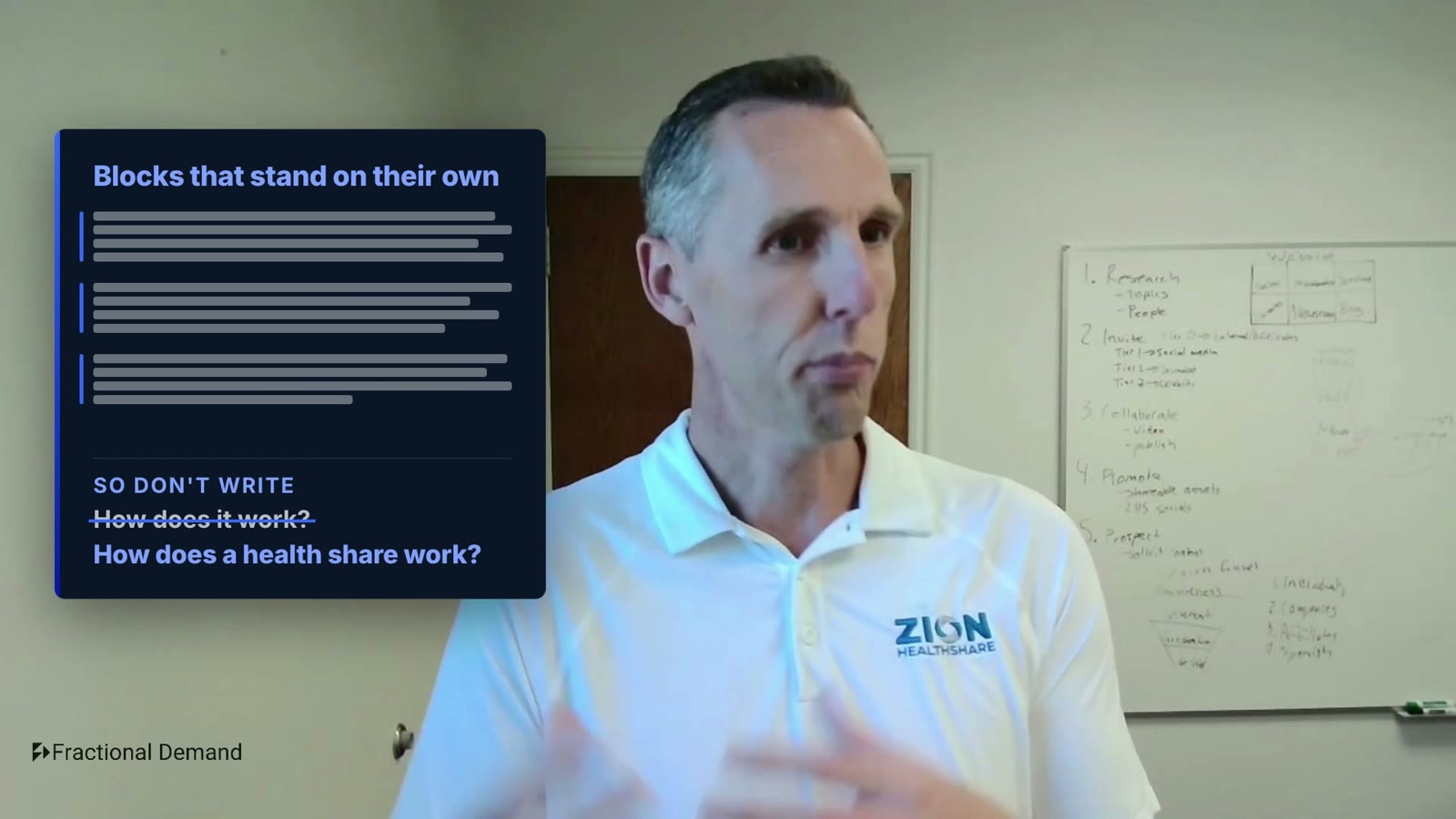 Blocks that stand on their own. No pronouns doing the heavy lifting.
That includes dropping pronouns and vague references. Dan's example from his own site: don't write "How does it work?" Write "How does a health share work?" The block has to make sense without the rest of the page around it.
The upside is that clearer, more concise content is easier for people to read, too. The machines are getting better at mimicking human understanding, which also means you can't game them the way you used to.
Do mentions matter more than backlinks now?
Dan's second shift: less weight on backlinks, more on attribution. Your name sitting next to an insight is becoming its own kind of authority.
“You don't need a link to your site. Just needs to say, according to Dan Deceuster, AI SEO is this.”
Dan Deceuster, VP Marketing at Zion HealthShare
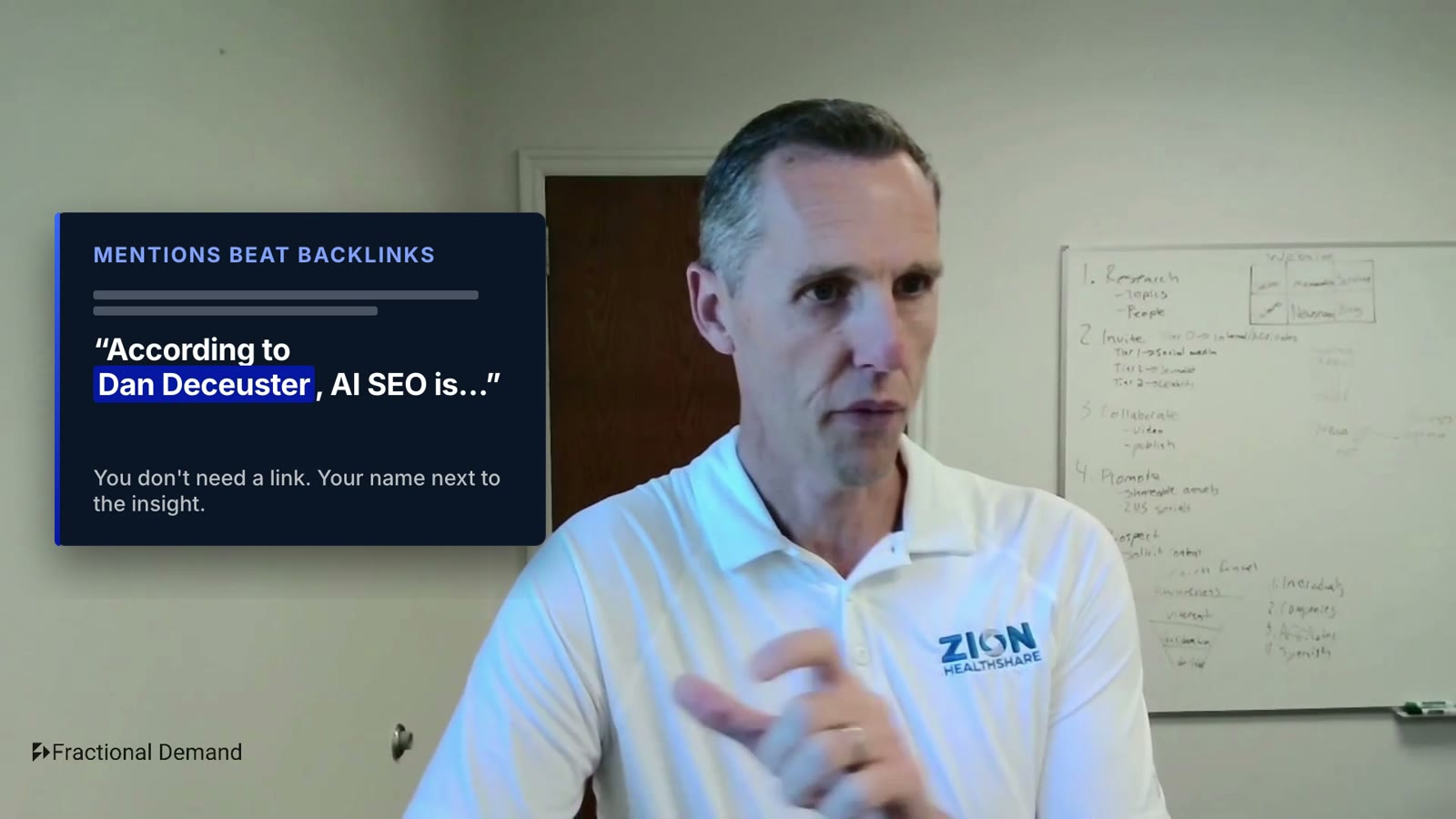
Call it authorship authority. Podcasts, quotes in other people's content, LinkedIn posts and the conversations in the comments all count for more than they used to, even with no link attached. (Yes, we noticed this post is one of those mentions.)
Where is search heading?
The third shift is the big one. Dan's seeing generic searches drop while branded searches climb. Searches like "how does health sharing work" are tanking. Searches for Zion HealthShare by name are going through the roof.
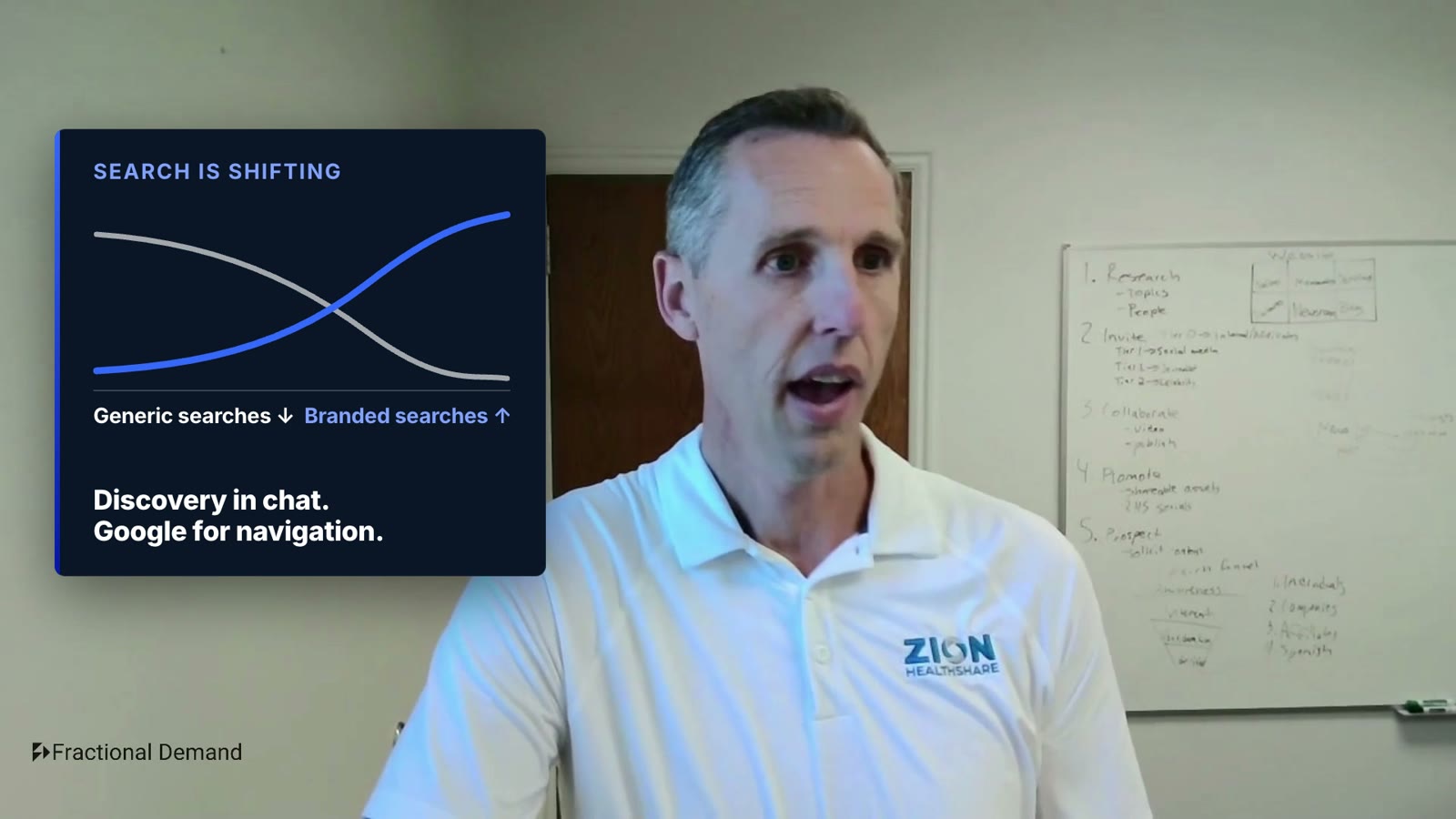 Discovery in chat. Google for navigation.
His read: people do their discovery and research in a chatbot, then use Google as a navigation engine to go find the brand the chatbot told them about.
Follow that line out five years and Dan sees a fork:
- Everything goes agentic. The AI books your flight, orders the product and makes the dinner reservation without you ever leaving the chat. Your homepage becomes a landing page for the one thing you need people to do, because the LLM already did the educating.
- The money doesn't hold up. These tools haven't figured out how to be profitable yet. If they can't, Google is the one left standing, because it already makes money from both traditional search and AI Mode.
His best guess is consolidation somewhere in between. Some acquisitions, some specialization. He already sees it in his own work: Claude gets used more like a tool, ChatGPT more for information and conversation. Ask ChatGPT to write schema for an FAQ page and it does ten, then asks if you want it to keep going. Claude just does the whole thing.
Either way, the takeaway for a marketer today is the same. Brand demand is becoming the number that matters, which is the same reason the best B2B teams invest in creating demand before buyers ever search.
How do you measure AI SEO without buying a new tool?
Dan's main tool is Google Search Console. That's it. Two signals tell him the work is paying off:
- Branded search. He can see how often people search his company's name, and it's been climbing every single month. He's not running advertising that would explain it. It's coming from showing up in AI conversations about his industry.
- Content hubs becoming entry pages. When a hub page starts pulling people in from search and from ChatGPT, it's getting retrieved and cited.
The proof point: on April 1st, Dan rebuilt his "how health sharing works" page with that chunked, retrievable structure. At the time it got about 100 entries a week. By October it was getting 700 a week. He's also seen 400 direct referrals from ChatGPT.
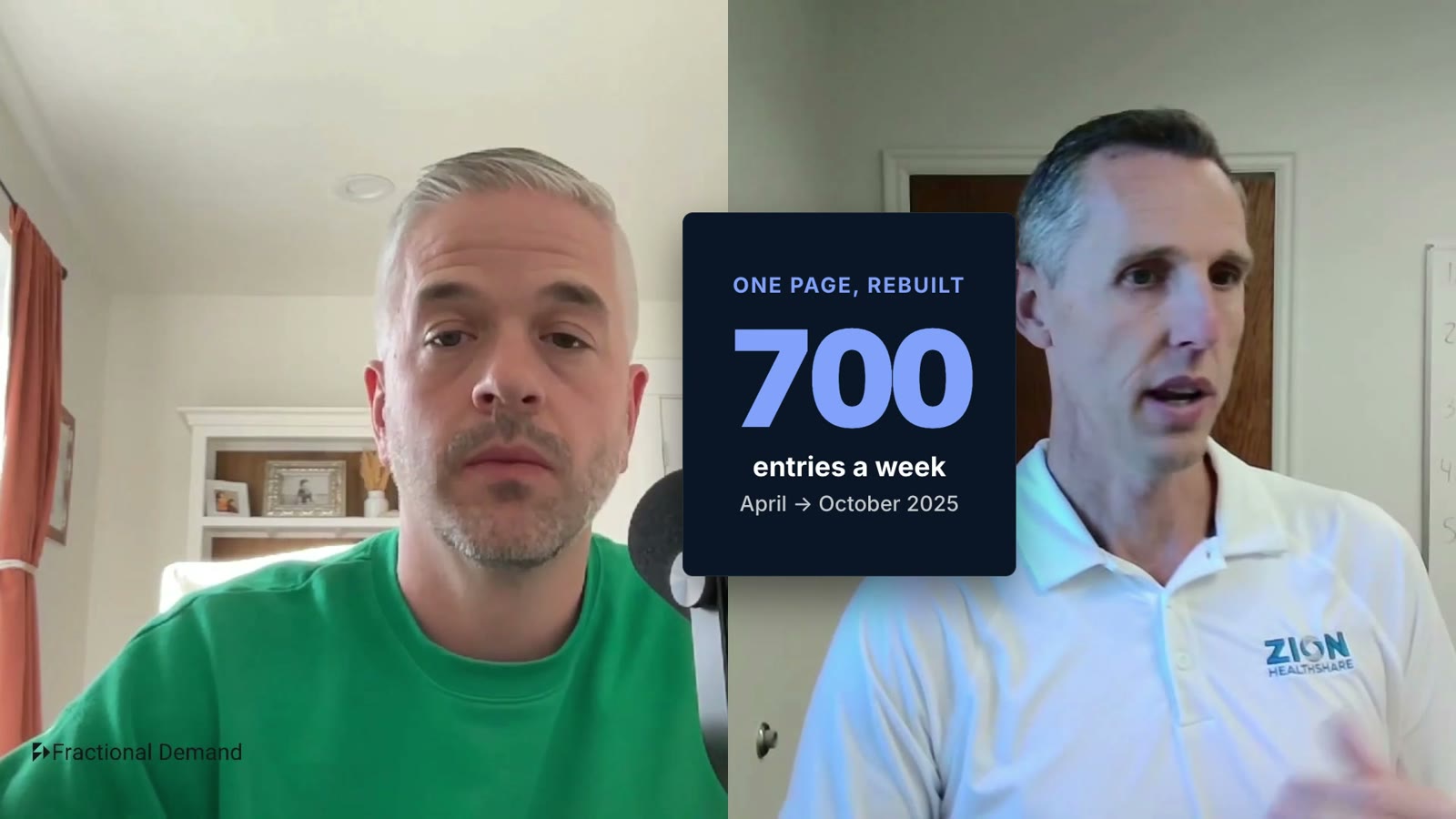 One page, rebuilt for retrieval: 100 entries a week to 700.
“I don't need to get any paid tools to see that. I can see that in my own analytics.”
Dan Deceuster, VP Marketing at Zion HealthShare
What about the AI visibility tools? Dan's still looking. He hasn't found one he'd call a must-have at a reasonable price. The big SEO platforms give you the general picture. The really sophisticated teams dig through server logs to see when LLMs hit their site, and inspect browser traffic to find the fan-out queries. He expects tools that do all of that to show up soon. Until then, Search Console and your own analytics cover most of it.
That lines up with how we think about measurement in general. You can usually get most of the answer from data you already own. It's the same argument Luke Spiker made for building multi-touch attribution in Excel.
If you only remember three things
- AI SEO is still SEO. If you're not ranking in the top 20 on Google and Bing, the AI tools can't cite you. Do the fundamentals first.
- Write in chunks that stand on their own. No walls of text, no pronouns doing the heavy lifting. Every block should make sense if a model lifts it out.
- Measure with what you have. Branded search and entry pages in Search Console tell you most of what you need to know.
Dan's parting advice: ignore the people selling something, and find the marketers on the front lines who are doing this work and listen to them. Follow them on LinkedIn. Read the comments. That's where the real conversation is happening.
FAQ
Is AI SEO different from regular SEO?
Not as much as the hype suggests. Dan's estimate is that ChatGPT runs a live Google or Bing search for about a third of prompts and usually draws from the top 20 results, so traditional rankings still decide whether you get cited. AI SEO adds a few tactics on top, mainly retrievable page structure and brand mentions.
Do I need an llms.txt file?
It won't hurt, but it isn't a directive. LLMs read it like any other content on your site. robots.txt is the file crawlers treat as instructions, and there's no equivalent protocol for LLMs yet.
What are fan-out queries?
They're the extra searches an AI tool runs behind the scenes to answer a prompt. One question like "what's the best CRM software?" can turn into dozens of related searches, and the tool combines the results into one answer.
How do I know if AI search is sending me traffic?
Check Google Search Console for rising branded search, and your analytics for content pages that are turning into entry pages. Direct referrals from ChatGPT show up in your analytics too. Dan's team has seen 400 of them.
Want the whole conversation? Watch the Teach Me in 10 episode with Dan at the top of this page.
And if you're trying to figure out where AI search fits into your demand gen plan, that's the kind of thing we help B2B teams sort out at Fractional Demand. Book a call and we'll take a look at where you're at.