LinkedIn Isn't Just a Publishing Channel. It's Two Channels You're Probably Underusing.
LinkedIn is two channels. Publishing and listening. The best B2B teams have a strategy for both. Here's why listening is the cheapest voice-of-customer research in B2B, and how to start.
Fractional Demand Team
When most B2B teams talk about LinkedIn, they mean one thing. Posts. Comments. Maybe ads.
That's a publishing strategy. It's fine. It's also a small slice of what the platform can do for your demand gen program.
Here's how I think about it. LinkedIn is two separate channels. One is the publishing channel everyone talks about. The other is a real-time intent and voice of customer feed sitting in plain sight. The best demand gen teams are already reading it and using it as a signal.
I want to walk through the second one. Why it matters, and how we've set it up for ourselves and a few clients.
The Two Buckets
Bucket one is publishing. You write content, your founder writes content, your subject matter experts write content. The point is to put something into the feed and get attention back. Most demand gen teams have at least a sketch of a plan here.
Bucket two is listening. Your ICP is on LinkedIn. They're posting about hiring. They're posting about pipeline stalling out. They're posting about funding rounds, leadership changes, tool evaluations, and the very specific problem they're trying to solve this week. That's intent data, in their own words, and the best teams are capturing it.
Why This Bucket Matters Right Now
Two reasons.
First, the cost of ignoring it has gone up. Intent data turned into its own category, and vendors charge a lot to tell you "an account at Series B is in market for your category." A lot of that signal is downstream of what your prospects are already saying out loud on LinkedIn. If you listen directly, you're earlier and you're more specific.
Second, the tooling caught up. Clay has social listening built in now. Trigify built a whole product around LinkedIn signals, and HubSpot bought it in September. When the biggest CRM in the mid-market buys a listening tool, I'd read that as a pretty clear sign of where this is headed.
If you're running outbound, paid media, or any kind of ABM motion and you're not using what your ICP posts, you're leaving the freshest, least gamed source of intent on the table.
What "Listening" Actually Looks Like
We use a mix of Clay and a few tools we built ourselves. The tools matter less than the setup, and the setup is pretty simple.
-
Define the audience. Somewhere between 50 and 1,000 people who match your ICP. For us that's heads of marketing, RevOps leaders, and founders at seed to Series C B2B SaaS companies.
-
Decide what counts as a signal. This is the part that's specific to you. Think about what your buyer says right before they need you. For most B2B SaaS companies that falls into a few groups:
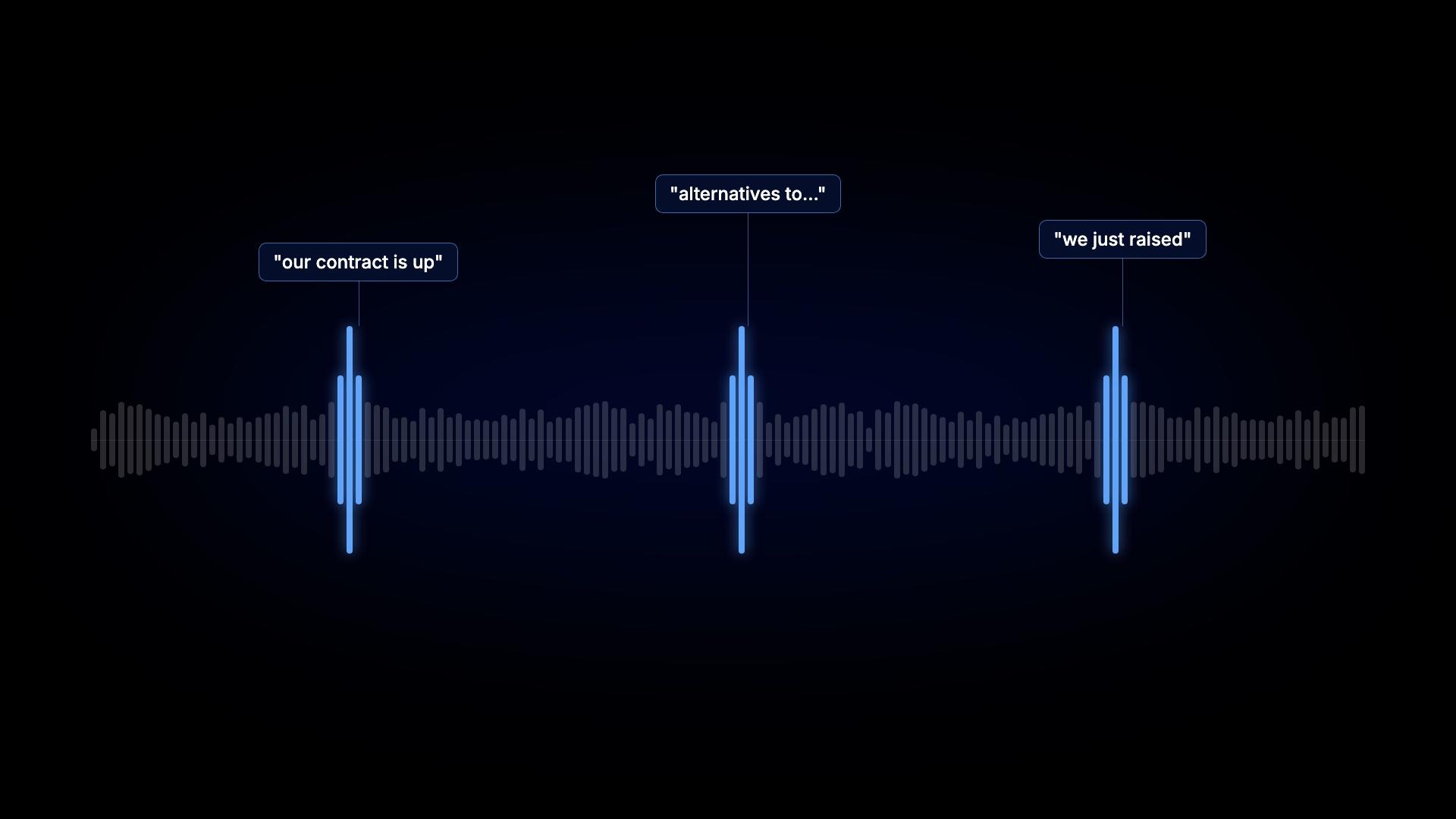
- Shopping: "looking for a tool that," "anyone have a recommendation for," "alternatives to [competitor]"
- Switching: "our contract is up," "we just moved off [competitor]," "migrating from"
- Pain: the problem your product solves, in the words your buyers use. If you sell a data tool, that's "our data is a mess" or "spent all week in spreadsheets."
- Trigger events: "excited to join as," "we just raised," "we're hiring a [the role that uses your product]"
Start narrow. You'll add more once you see what comes back.
-
Check often. Most people post nothing on a given day. That's fine. You want to catch the post within a day or two, not a month later.
-
Score before anyone acts. Not every keyword match is a buyer. Each post that matches gets a relevance score, a one-line reason, and a suggested angle for outreach. That step is what keeps the feed from drowning you in noise.
-
Route the good ones. Anything above your threshold goes where your team already works. For us and our clients that's usually two places:
- A Slack notification, with the post and the suggested angle right there, so someone can act on it the same day.
- The CRM, logged on the contact and the account, so whoever picks it up later has the full context. What they posted, when, and why it mattered.
That's the first output. The intent feed.
The second output is what we call trending. Same audience, but instead of hunting for matches, you look at everything they posted that week and pull out the themes, the sentiment, and the pain points. It's a weekly read on what your audience is actually talking about. Not what you assume they're talking about.
Use Case 1: The Outreach Layer
This is the obvious one. A prospect posts about pipeline stalling. It scores a 7. The reason and a suggested angle land in Slack and on the contact in the CRM. Sales has a real reason to reach out within a day of the post going live.
The goal here isn't "automate the message." It's "stop missing the moment." Most outbound is timed wrong. The best window for a relevant message is the 48 hours after someone admits, in public, that they have the problem you solve. Listening is how you find that window.
And to be clear, the message itself should still sound like a person who noticed something. Not a robot that noticed something.
Use Case 2: The Voice of Customer Layer
This is the one the best teams lean on hardest. I think it's the more valuable of the two over time.
The trending output is voice of customer. It's what your audience is complaining about, asking about, and getting excited about, in their own words, this week.
That feeds a lot of things.
- Content. Stop guessing at topics. Look at what your ICP posted about three times this week and write about that.
- Your offer. If five different heads of marketing are publicly frustrated about the same thing, that's a brief.
- Messaging. The words your audience uses usually aren't the words on your website. This shows you the gap fast.
Customer interviews are great. They're also hard to book and the sample is small. This is the cheapest voice of customer research I know of in B2B. It runs all the time, it costs less than an intent vendor, and the input is your audience saying real things in their own words.
How to Get Started Without Building Anything
You don't need custom tools. The minimum viable version is:
- A list of 50 to 100 people who match your ICP
- A short list of phrases you'd care about
- One person who skims their recent posts once a week and flags anything good
That's a manual version of bucket two. It works. It'll surface signal. Tools just make it scale.
If you have a Clay seat, go one step further. Set up social listening on your ICP list, filter on your phrases, and send matches to Slack. That gets you most of the way there with no code. One heads up if you were eyeing Trigify: the standalone product is winding down after the HubSpot deal, so I wouldn't build a new process on it right now.
We ended up building some of our own pieces because we wanted the trending output too. Honestly, that's a nice to have for a 50-person pilot. It starts to matter when you're listening across a few hundred people and want patterns, not individual posts.
The Real Point
LinkedIn is two channels. Publishing is one. Listening is the other. The best B2B teams have a strategy for both.
So here's what I'd try. Pick 50 people and three phrases. See what comes back in a week. The bar for getting useful signal out of this is a lot lower than the intent vendors would like you to think.
Lines in the water are cheap right now. Put more of them in.
If you want help setting up a listening layer for your own demand gen program, that's something we do, for clients and for ourselves. Picking the right ICP list, deciding which phrases actually mean buying intent, and scoring it so your team isn't buried in noise. Grab a time and we'll walk through it.