
RevOps Best Practices That Actually Move Pipeline
Most RevOps setups look busy but don't move pipeline. Here's what actually works: clean data, smart enrichment, and attribution that tells the truth.
Fractional Demand Team
Bring up RevOps in any B2B room and you'll spend an hour on org charts and alignment. I've never seen a pipeline miss caused by an org chart, but plenty caused by bad HubSpot data.
Why Most RevOps Content Misses the Actual Problem
The "best practices" that show up in most content are about process and structure. Align sales, marketing, and customer success around one funnel definition. Create shared accountability. Get everyone singing from the same sheet.
I don't disagree. But process without clean data underneath it is theater.
Here's what I actually see when we come into a new client's RevOps setup:
- Contacts with no company size, industry, or revenue range (because nobody built an enrichment layer)
- HubSpot lifecycle stages that are manually updated, mostly wrong, and trusted by nobody
- Attribution reporting "direct" or "offline sources" on 60% of deals because UTMs were never set up correctly
- Lead routing that ignores ICP fit entirely and just rotates through a round-robin
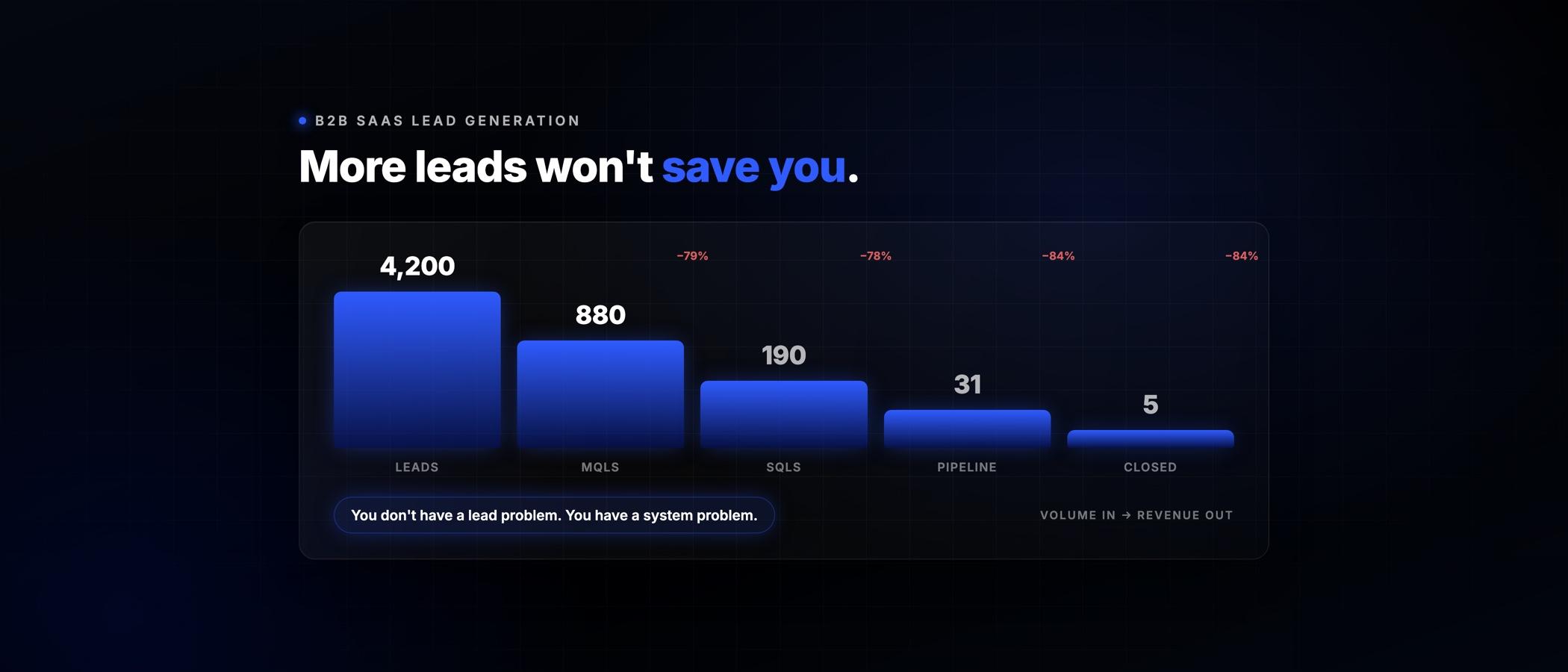
That's where deals die. Not in the conversation about org design.
RevOps Best Practice #1: Clean Data First, Tools Second
This is the least exciting thing I'll say and probably the most important.
I've been doing this long enough to know that clean, enriched data compounds in a way that almost nothing else does in a GTM system. When a rep gets a lead with company size, industry, tech stack, and an ICP score already attached, they follow up faster, they say the right things, and they stop asking operations to fix it.
What "clean data" actually means in practice:
Every contact has company name, industry, employee count, and revenue range. Either from the form fill or from enrichment. No exceptions.
Duplicate records are caught upstream, not cleaned up after the fact every quarter.
Lifecycle stages move automatically based on behavior and milestones. Not manually. If a rep has to update a lifecycle stage themselves, it'll be wrong roughly half the time.
Lead source is captured at form fill and preserved through the contact's history. Not rewritten every time they download something new.
Clay is genuinely useful here. A waterfall enrichment setup pulls from three or four providers and only charges when you get a match. We typically see 60-70% fill rates on previously blank firmographic fields. That's not clever engineering. It's just connecting the data layer that should have existed from the beginning.
Quick check you can do today: pull your HubSpot contacts list and filter for company size being blank. Whatever that percentage is, that's the gap. If it's above 20%, fix that before anything else on your roadmap.
RevOps Best Practice #2: Build Attribution Before You Need the Report
Marketing always wants attribution data after the fact. "Which campaigns influenced the deals we closed last quarter?" And in most HubSpot setups, the honest answer is: we don't really know.
That's not a tool problem. It's a setup problem. Nobody built it before they needed it.
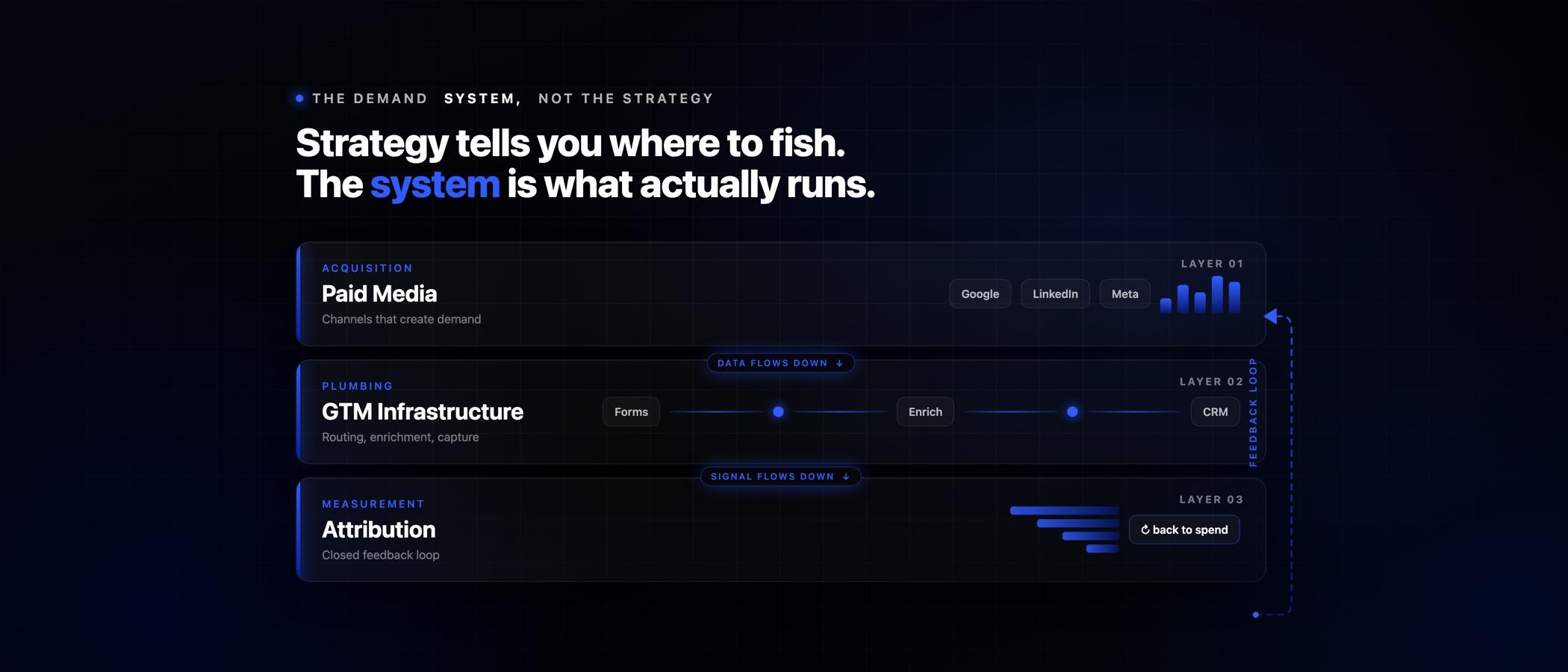
Here's what a working attribution setup actually requires:
UTM parameters on every link that goes out. Every ad. Every email. Every partner referral. Consistent naming convention. No exceptions. If a URL goes out without UTMs, that's a process failure, not a technology failure.
First-touch and last-touch captured at the contact level. HubSpot tracks this natively, but only if the contact was created through a tracked source. Contacts added manually by reps show up as "direct." You either enrich the source retroactively or build rep training that includes logging it at creation.
Deal influence tracked at the campaign level, not just lead source. A deal might have been touched by five campaigns before it closed. If you're crediting only the last one, your paid media budget decisions are built on incomplete information. The math doesn't math, as I like to say.
I don't think this is glamorous work. But the teams who do it right can actually defend their numbers in a budget conversation. That's the whole point of building this function in the first place.
RevOps Best Practice #3: Run Parallel Short Plays, Not One Long Project
The most common mistake I see in RevOps builds: the team picks one major initiative (a new scoring model, a full HubSpot cleanup, a data governance framework) and disappears into it for three months.
Leadership notices nothing changed. Pipeline is still flat. The RevOps person is underwater and can't explain what they've been working on.
The teams that see results faster do it differently. They run three or four smaller plays at the same time. Lines in the water. Each play scoped to a week or two. Each one with a measurable output. Each one feeding into the next.
For a typical Series B company, it looks something like this:
Weeks 1-2: Enrich the top 500 accounts in your ICP using Clay. Score by firmographic fit. Hand the top 50 to sales with a note on why each one matters now.
Weeks 3-4: Audit and automate lifecycle stage transitions. Make sure every deal stage maps correctly to a HubSpot stage and that stage movement is logged without rep intervention.
Weeks 5-6: Build a lead routing rule that gets ICP-fit inbound leads to the right rep in under five minutes. Measure time-to-first-touch before and after. The delta is the proof.
Weeks 7-8: Build a pipeline report that shows exactly where deals are stalling. By stage. By rep. By segment. This becomes the weekly ops review, not a one-time project.
None of those take three months. All of them move pipeline. That's the play.
RevOps Best Practice #4: Measure What Sales Actually Cares About
Here's the split that quietly breaks a lot of RevOps functions: marketing wants to see MQLs, pipeline influence, and campaign ROI. Sales wants to know why deals are stalling and which leads are actually worth calling.
If RevOps only builds dashboards that answer marketing's questions, it loses credibility with sales quickly. And once you've lost the sales team, you're building a function that only half the organization trusts.
The fix is straightforward. Build two reports. Run them in the same weekly meeting.
Report one for marketing: pipeline sourced by channel, cost per lead by campaign, attribution by touch across the deal lifecycle.
Report two for sales: deals by stage and days in stage, conversion rate by rep, ICP-fit inbound leads that haven't had a first touch in more than 24 hours.
That's how alignment actually happens. Not through a workshop about shared values. Through shared data, reviewed together, every week. The org structure conversation gets a lot easier once both sides are looking at the same numbers.
Where to Start If You're Building This from Scratch
If RevOps at your company currently means "the person who manages HubSpot," here's the actual first step.
Pull a report on your last 20 closed-won deals. For each one, answer four questions:
What was the original lead source? What campaigns touched the contact before they became an opportunity? What was the ICP fit at the time of handoff? How many days from first touch to closed-won?
If you can't answer those questions from your CRM, you've found your RevOps roadmap. Not a new tool. Not a new hire. Just the foundation work that tells the truth about your pipeline.
I'm not going to pretend there's a shortcut here. Clean data, working attribution, and useful reporting all take time to build. But they compound. A system that tells you the truth in month three looks completely different from the one you started with.
That's the whole game. Build the thing that tells you what's actually working. Everything else follows.